
Last Updated: November 11, 2026
Quick Summary
Ayurvedic botanical skincare benefits dry skin through anti-inflammatory plant compounds, barrier-supporting oils, and a routine built around your skin's actual condition. It calms inflammation instead of stripping oil, and whole-plant ingredients support skin elasticity and moisture. A workable routine takes four steps and under five minutes: cleanse, treat, hydrate, protect.
- The global Ayurvedic market reached USD 12.48 billion in 2025 and is projected to hit USD 14.57 billion in 2026.
- Introduce one new botanical product at a time so you can identify the cause of any reaction.
- Patch test any new botanical on your inner forearm for 24 hours before wider use.
- The repair masque is applied twice weekly for up to five minutes.
- Choose products that name hero ingredients by Latin name and carry dermatological testing.
Table of Contents
- What Ayurvedic Botanical Skincare Actually Does for Your Skin
- The Benefits of Ayurvedic Botanical Skincare for Acne and Blemishes
- How Botanical Actives Calm Redness, Irritation and Sensitive Skin
- Hydration and Barrier Support for Dry, Sun-Exposed Skin
- Building an Ayurvedic Skincare Routine That Fits Your Day
- Ayurvedic Skin Care Home Remedies Worth Trying (and What to Skip)
- How to Choose the Best Ayurvedic Skin Care Products
- Start Your Climate-Adaptive Routine with Mojave Desert Skin Shield
- Frequently Asked Questions
What Ayurvedic Botanical Skincare Actually Does for Your Skin
The global Ayurvedic market reached USD 12.48 billion in 2025 and is projected to hit USD 14.57 billion in 2026, according to Market Data Forecast's Ayurvedic market sizing report. That growth reflects something we see daily at Mojave Desert Skin Shield: people want skincare that works with their environment, not against it.
Ayurvedic botanical skincare is a plant-based approach to skin health drawn from traditional Indian medicine, built on the idea that skin reflects internal balance and responds best to whole-plant ingredients rather than isolated synthetics. The benefits of ayurvedic botanical skincare come from three things: anti-inflammatory plant compounds, barrier-supporting oils, and a routine built around your skin's actual condition.
Here's what most guides get wrong. They treat Ayurveda as a marketing label. The real value sits in the formulation: polyphenols in plant-based cosmeceuticals show anti-inflammatory, anti-wrinkle and moisturizing qualities that support skin elasticity, per research published in ScienceDirect's plant-based cosmeceuticals study.
Below, we break down what these botanicals do for acne, redness, dryness and sensitivity, and how to build a routine that fits a real day.
The Benefits of Ayurvedic Botanical Skincare for Acne and Blemishes
Botanical ingredients are often chosen to calm inflammation rather than strip oil, because harsh cleansers can trigger rebound oil production. The useful depth sits in naming the specific plants, the compounds they carry, and how strong the evidence actually is for each.
Four botanicals carry most of the traditional and modern acne case for Ayurvedic skincare:
Research interest here is real but uneven. A PMC-NIH review of botanicals in skin care logged 114 citations on practical botanical uses, while a 2024 dermatological review carried only 2. That gap tells you something honest: tradition runs ahead of the clinical literature. A practical way to read it is to separate traditional use (centuries of observation, no controlled trials) from ingredient-specific evidence (laboratory and small human studies on isolated compounds) from clinical proof (large randomized trials, which are rare for most Ayurvedic botanicals). Most products sit in the first two categories, and that is fine as long as the marketing does not claim the third.
Close-up of a dark green leather strap with stitching and a silver metal buckle, likely part of a bag or backpack.
Watch out: introduce one new botanical product at a time so you can identify the cause of any reaction.
How Botanical Actives Calm Redness, Irritation and Sensitive Skin
The Luminous Skin Resilience & Repair Masque combines marshmallow, slippery elm bark, eleuthero and ashwagandha.
Our Luminous Skin Resilience & Repair Masque combines eleuthero, marshmallow, slippery elm bark and ashwagandha, and is applied twice weekly for up to five minutes.
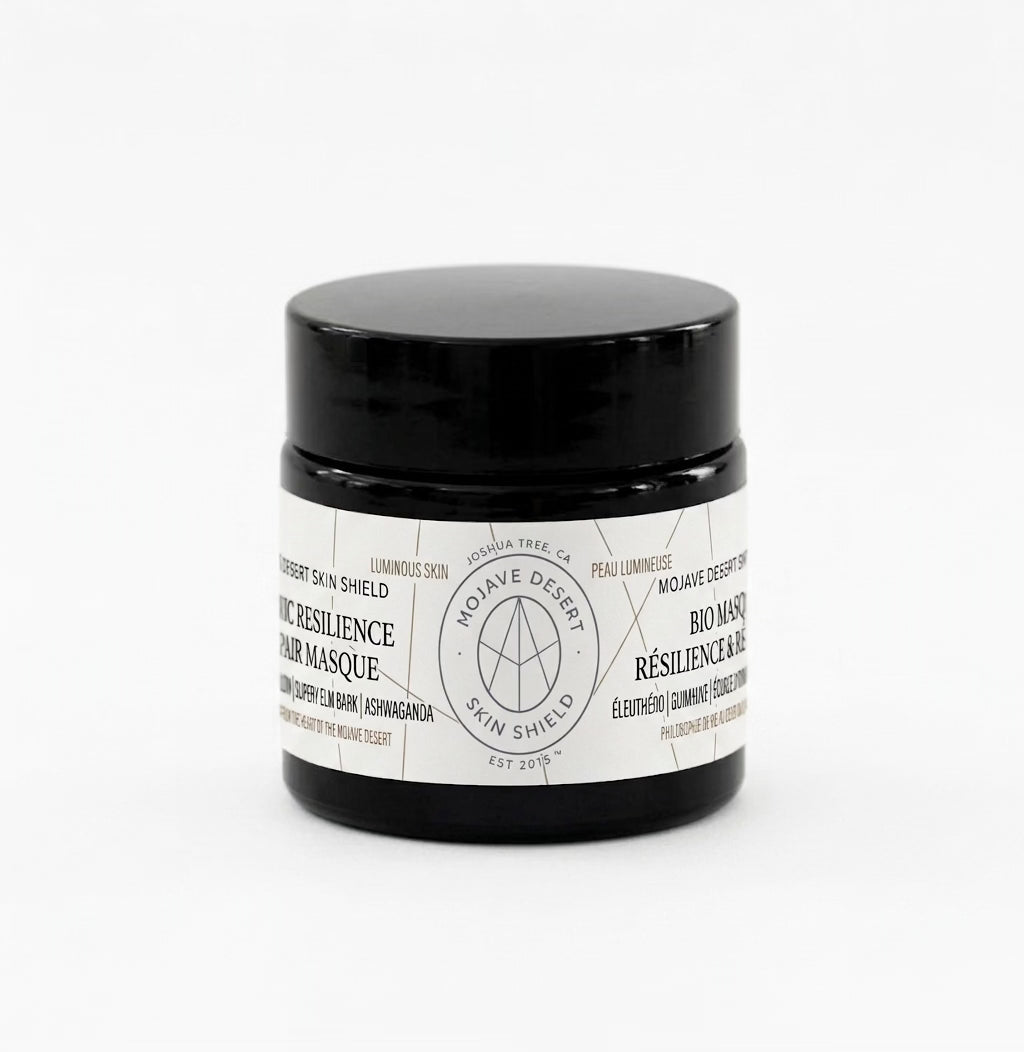
Luminous Skin Resilience & Repair Masque
Close-up of a dark green leather bag showing a buckled strap, stitched edges, and a flap pocket with a metal stud.
One caution: patch test any new botanical on your inner forearm for 24 hours. Plant extracts carry real allergen potential, and essential oils are a common culprit.
Hydration and Barrier Support for Dry, Sun-Exposed Skin
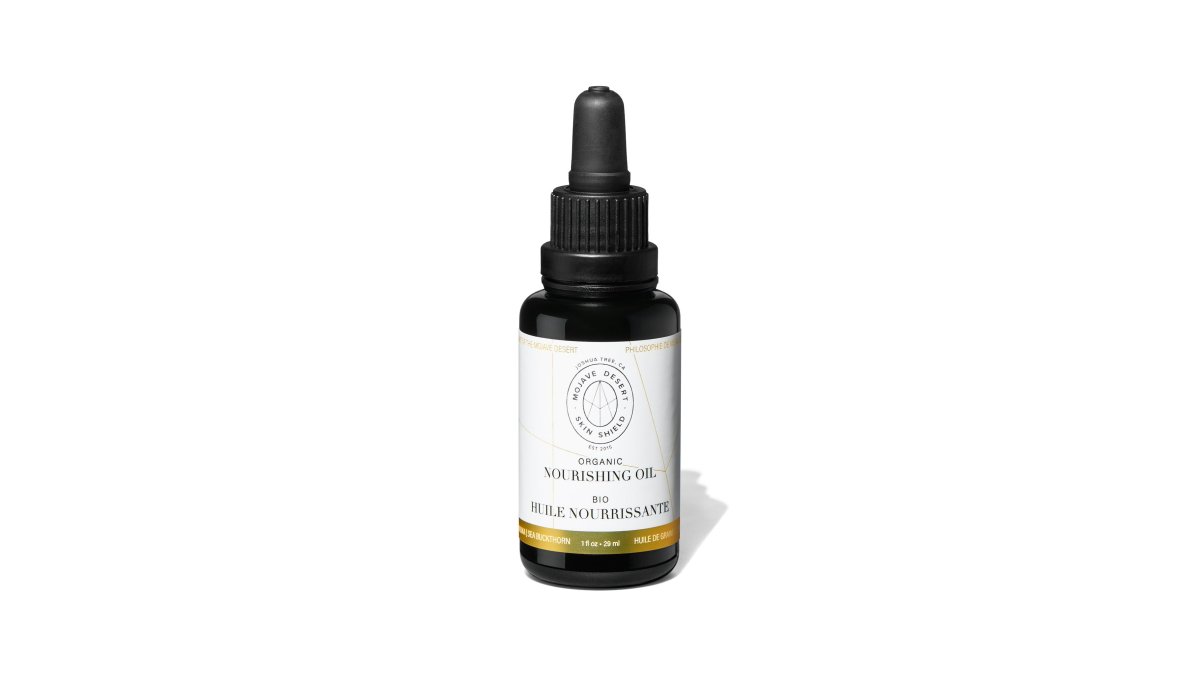
Our Organic Nourishing Oil is an organic, cold-pressed botanical oil formulated for dry, sun-exposed skin.
Our Organic Nourishing Oil 1.0 oz is dermatologist-tested. Its hero ingredients are carrot seed oil, manuka oil and sea buckthorn, and it can be used by both day and night.
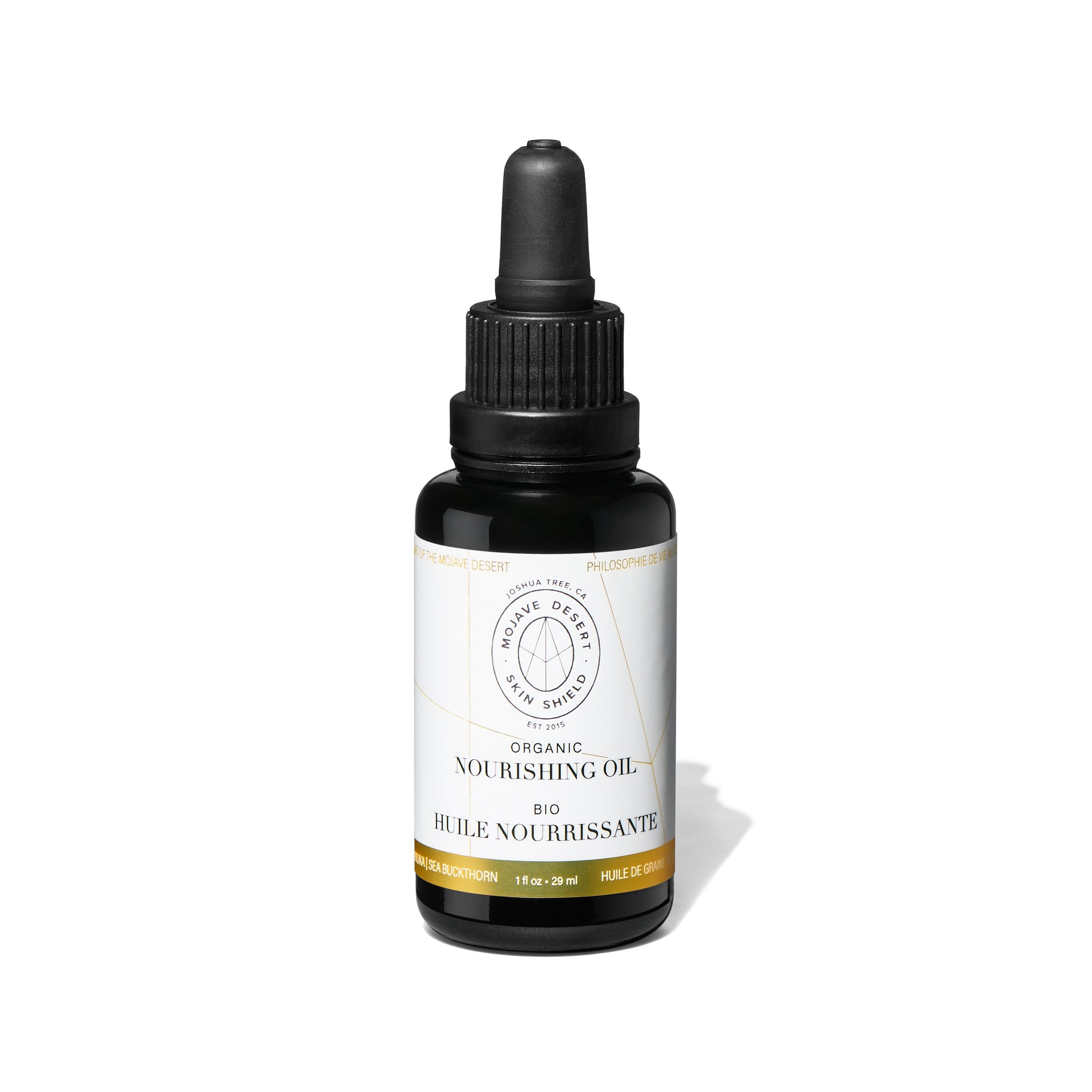
Organic Nourishing Oil 1.0 oz
Building an Ayurvedic Skincare Routine That Fits Your Day
A workable Ayurvedic skincare routine takes four steps and under five minutes. Traditional practice layers in dosha considerations (Vata, Pitta, Kapha), but the practical core is simple: cleanse, treat, hydrate, protect.
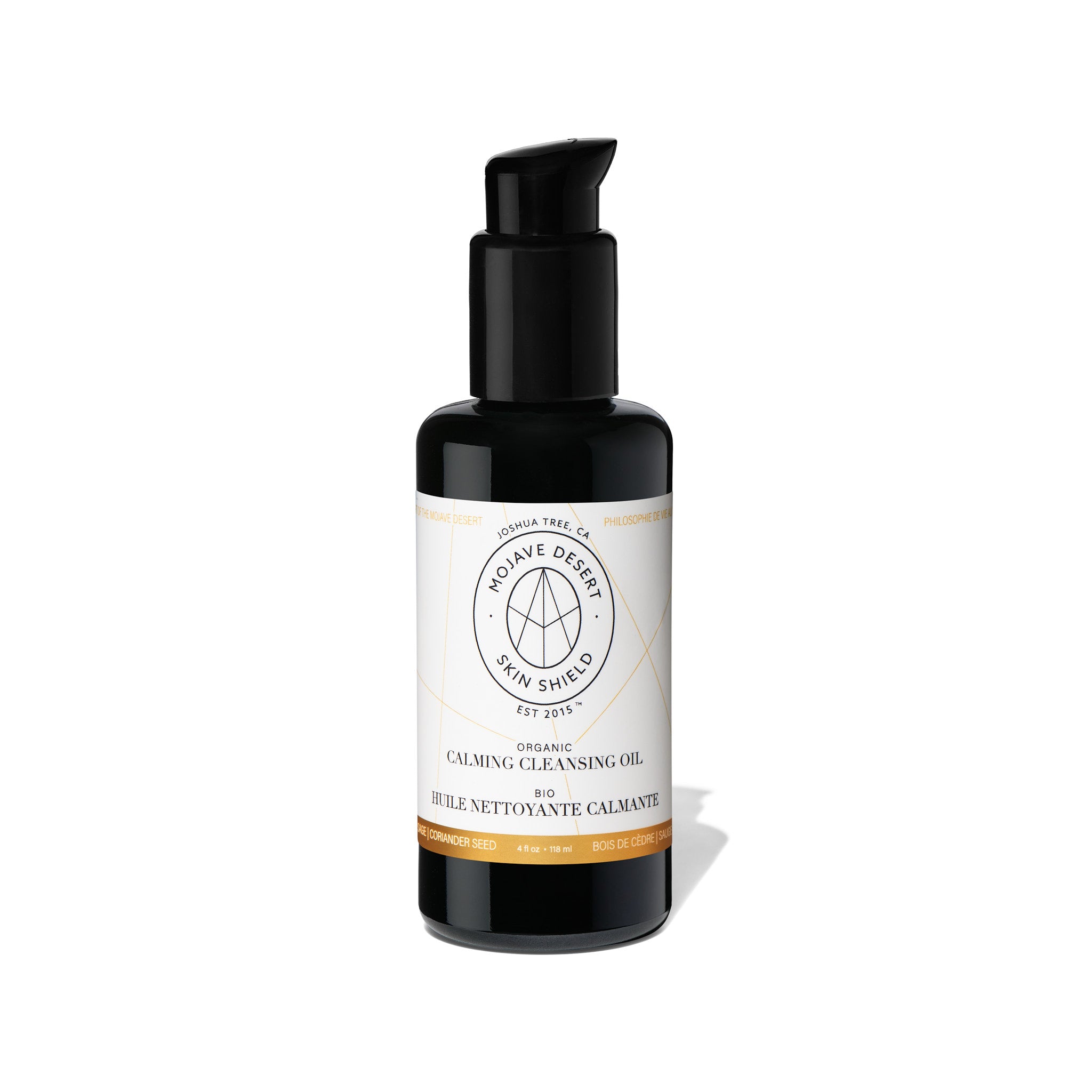
- Cleanse with oil. Massage our Organic Calming Cleansing Oil 4.0 oz into dry skin, then rinse warm. Cedar wood, sage and coriander seed are its hero ingredients.
- Treat twice weekly. Apply the repair masque to cleansed skin for up to five minutes.
- Seal in moisture. Press nourishing oil into damp skin, morning and night.
- Dry brush before showering. The Ionic Body Brush is used with gentle upward strokes, following its directions.
Four dark green leather bags on a light surface: a drawstring backpack and three zippered or flap pouches with embossed logos.
Step |
Product |
Frequency |
Time |
|---|---|---|---|
Cleanse |
Calming Cleansing Oil |
Daily, AM/PM |
2 min |
Treat |
Repair Masque |
2x weekly |
5 min |
Hydrate |
Nourishing Oil |
Daily, AM/PM |
1 min |
Brush |
Ionic Body Brush |
Daily, pre-shower |
3 min |
Time
Ayurvedic Skin Care Home Remedies Worth Trying (and What to Skip)
Watch out: any remedy applied at full strength, undiluted, risks a chemical burn or contact dermatitis. Dilute, patch test, and stop at the first sign of stinging.
How to Choose the Best Ayurvedic Skin Care Products
The best Ayurvedic skin care products name their hero ingredients and carry dermatological testing. Vague "ancient formula" language without an ingredient list is a red flag.
A Wiley Journal of Cosmetic Dermatology review describes Ayurvedic skincare as having promising prospects while calling for stronger quality control and clinical validation. That is the standard to hold brands to, and it translates into four concrete checks.
1. Read the ingredient list in the right order. Ingredients are listed by weight down to 1%, so anything after the fragrance or preservative is present in small amounts. A product that leads with water and lists turmeric near the bottom is not a turmeric product in any meaningful sense. Look for the botanical's Latin name (Curcuma longa, not just "turmeric extract") because that is how you verify what was actually used.
2. Separate traditional use from clinical evidence. A brand that says "used in Ayurveda for centuries" is making a traditional-use claim, not a clinical one. Neither is dishonest, but they are different. Ask whether the specific botanical in the formula has published research, and whether that research was on the isolated compound or the finished product. Most of the time it is the former, which means the formula's real-world effect is still an open question.
3. Check the formulation, not just the ingredient list. Concentration, pH, and delivery matter as much as which plants are included. A 0.1% curcumin extract in a well-formulated emulsion may do more than a 5% extract in a formula that oxidizes in the jar. Look for opaque or airless packaging for antioxidant-rich oils, a stated pH for anything acidic, and a clear expiry or period-after-opening date.
4. Evaluate safety and quality testing. Dermatologist-tested and third-party-tested are not the same claim, and neither guarantees the product suits your skin. Look for a full allergen disclosure, guidance on patch testing, and a brand that names its testing lab or standard. For botanical products specifically, contamination and adulteration are real concerns, so a brand that publishes sourcing or batch testing is a safer bet.
Use this checklist before buying:
- Full ingredient list published, with botanicals named by Latin name
- Hero botanical appears early enough in the list to be meaningful
- Dermatologist tested or third-party tested, with the standard named
- Clear guidance for sensitive skin and patch testing
- Formulated for your climate, not a generic one
- No treatment claims that outrun the evidence
If you're weighing whether botanical essences earn their place in a routine, our guide to organic botanical facial essences covers the trade-offs.
Start Your Climate-Adaptive Routine with Mojave Desert Skin Shield
Skin living in dry, sun-exposed air needs formulas built for that reality, not adapted to it afterward. That's the whole premise behind our line, formulated in Joshua Tree, California, around organic botanicals and Ayurveda-inspired principles.
Our climate-adaptive approach means products that support the barrier through low humidity, high UV and temperature swings, whether you're in the desert or moving between dry and humid cities. If you're traveling, our skincare tips for travel cover how to keep hydration steady across environments.
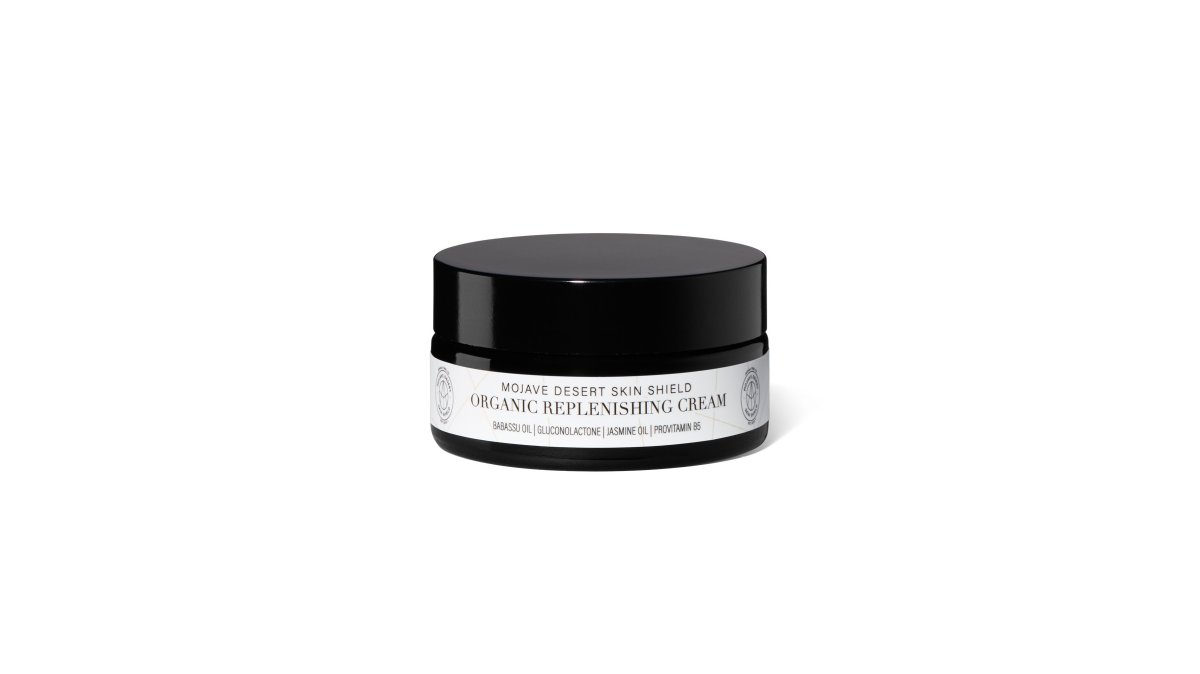
Start with the Nourishing Oil and Cleansing Oil as your base pair. Add the repair masque twice weekly if you want to use it as part of your routine. Get started with Mojave Desert Skin Shield and give your skin a routine that respects where you actually live.
Frequently Asked Questions
Is Ayurvedic botanical skincare effective?
The evidence is promising but uneven. The evidence for Ayurvedic botanical skincare is promising but uneven, and more quality control and clinical trials are needed. Treat botanical skincare as a routine for daily care rather than as a proven treatment for medical skin conditions.
Can Ayurvedic skincare help acne-prone skin?
Some botanicals earn their place in an acne routine. Persistent cystic acne still needs a dermatologist, so use botanicals as support, not as a replacement for medical care.
Are Ayurvedic skincare ingredients safe for sensitive skin?
Most botanical ingredients are well tolerated, but plant extracts can still trigger contact reactions. Patch test any new product on the inner forearm for 24 to 48 hours before using it on your face, and introduce one product at a time so you can identify the cause of any reaction. If you have rosacea or a diagnosed skin condition, show the ingredient list to your dermatologist first. Mojave Desert Skin Shield's Nourishing Oil and Calming Cleansing Oil are both dermatologist tested.
How do I build an Ayurvedic skincare routine?
Keep it to three steps. Cleanse with a gentle oil in the evening to remove makeup and dirt without disturbing the skin's bio-balance, treat two or three times a week with a botanical masque, then seal in moisture with a nourishing oil morning and night. Add dry brushing before your shower. The full routine takes about five minutes, which matters more than a long ingredient list, because consistency is what lets botanical actives work over time.