

Table of Contents
- Why Ayurvedic Skincare Suits Dry, Sensitive Skin
- The Best Ayurvedic Face Oil for Dry Skin
- Ayurvedic Herbs for Skin Inflammation
- How to Balance Vata Skin
- Patch Testing and Allergy-Safe Use for Sensitive Skin
- A Complete Routine for Dry, Sensitive Skin
- When to Seek Dermatological Care
- Frequently Asked Questions
Last Updated: October 21, 2026
Why Ayurvedic Skincare Suits Dry, Sensitive Skin
The global Ayurvedic skincare market is valued at approximately USD 1.2 billion, and much of that growth comes from people whose skin reacts badly to conventional products. At Mojave Desert Skin Shield, we formulate for exactly this group: skin living in dry, sun-exposed air that needs nourishment without aggression. Ayurvedic skincare is the practice of matching botanical ingredients to your skin's constitution, or dosha, rather than treating every face the same way. For dry, sensitive skin, that match matters more than the ingredient list's length. Market volume analysis of Ayurvedic skincare
The logic is straightforward. Dry skin lacks oil and water; sensitive skin has a compromised barrier that lets irritants in. Harsh cleansers and synthetic fragrance make both worse. Ayurveda's answer is oil-based cleansing and calming botanicals, which is why the approach suits reactive skin so well.
The Best Ayurvedic Face Oil for Dry Skin
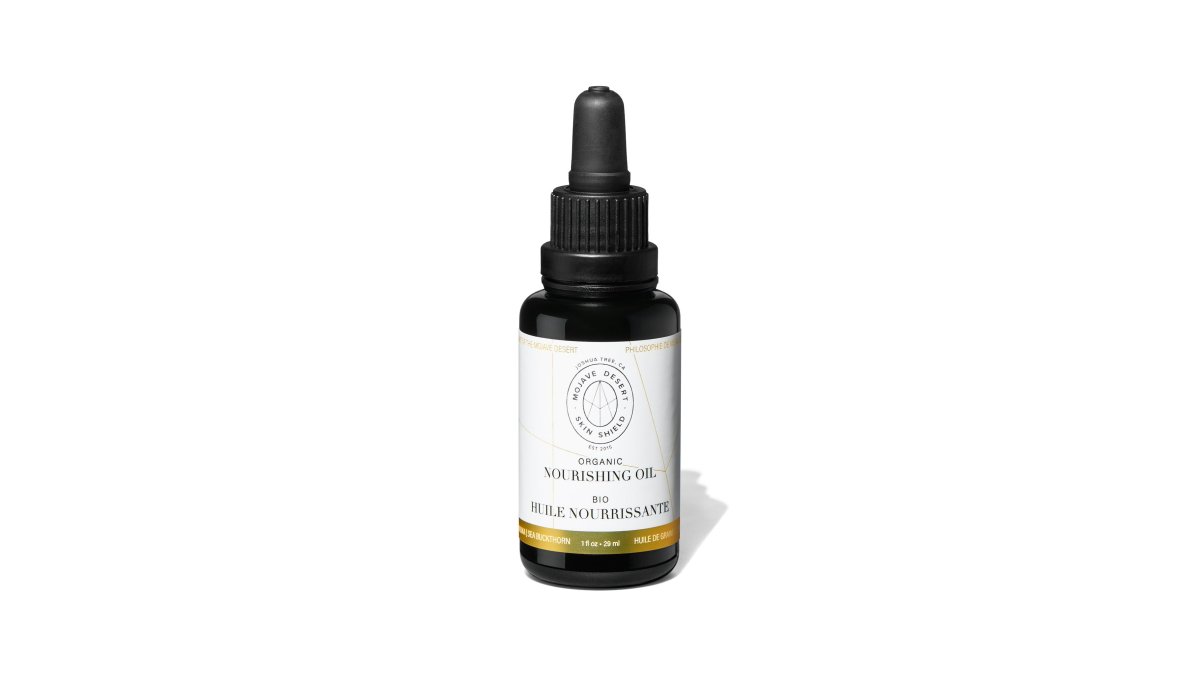
The best Ayurvedic face oil for dry skin is one built on cold-pressed botanical oils with added calming actives, not fragrance. Look for short ingredient lists and a formula that absorbs rather than sits on the surface. Our Organic Nourishing Oil combines cold-pressed organic oils with parsley extract, rich in apigenin, and rosemary leaf oil, a concentrated source of carnosic acid, both studied for their antioxidant and calming properties. It is dermatologist tested and vegan.

What to Look for in a Face Oil
Four criteria separate a useful face oil from a decorative one:
- Cold-pressed extraction, which preserves more of the plant's natural compounds
- Anti-inflammatory botanicals such as apigenin or carnosic acid, not just carrier oils
- No added fragrance or essential oil blends if your skin is reactive
- A seal of testing, ideally dermatologist tested, before you commit
Ayurvedic Herbs for Skin Inflammation
Ayurvedic herbs for skin inflammation work by calming redness and supporting the barrier rather than suppressing symptoms. Turmeric, gotu kola, manjistha, neem, and sandalwood are the most cited, and each has a distinct role, but the difference between a soothing formula and a reactive one usually comes down to how the herb is delivered, not which herb you choose. A 2023 review noted that plant-based cosmeceuticals help skin retain moisture, support collagen and elastin production, and remove dead skin cells. Study of plant-based cosmeceuticals and skin care
Soothing Botanicals: Mechanism, Delivery, and Cautions
| Herb | Traditional Role | Mechanism and Best Delivery | Concentration and Compatibility Notes |
|---|---|---|---|
| Turmeric (curcumin) | Calms redness | Antioxidant and anti-inflammatory; best as a short-contact mask or a low-percentage leave-on serum, not neat powder | Neat turmeric is drying and can stain; pair with a carrier oil such as sesame or jojoba. |
| Gotu kola (centella) | Supports barrier repair | Triterpenoids support collagen and calm reactivity; works well in serums and creams | Leave-on formats suit sensitive skin better than rinses. |
| Manjistha | Traditional blood purifier | Antioxidant-rich; commonly infused into carrier oils | Oil infusion is gentler than alcohol tinctures for reactive skin. |
| Neem | Antibacterial | Antimicrobial and clarifying; potent and drying if overused | Use diluted and rinse-off first. |
| Sandalwood | Cooling, soothing | Calming and lightly astringent; suits calming masks and light lotions | Avoid pairing with warming essential oils such as cinnamon or clove. |
Leave-On Versus Rinse-Off: A Practical Rule
For dry, sensitive skin, the safest sequence is to start with rinse-off or short-contact formats, a turmeric or sandalwood mask left on for five to ten minutes, and move to leave-on serums only after a clean patch test. Rinse-off limits exposure time, which matters because several Ayurvedic herbs contain volatile compounds that can irritate a compromised barrier. Leave-on products should use standardized extracts or infused carrier oils rather than raw powders, and they should list the carrier oil, because the oil often determines whether the formula absorbs or sits on the surface.
Carrier Oils and Potentially Irritating Combinations
Carrier oils are not neutral filler. Sesame oil is traditional for Vata-type dryness but is heavier and can feel occlusive in humid weather; jojoba is lighter and closer to skin's own sebum; almond and sunflower are common gentle options. The combinations to avoid on reactive skin are the ones that stack several potential irritants in one step: essential-oil blends plus exfoliating acids, warming oils such as cinnamon or clove plus a calming herb, and neat herbal powders plus a foaming cleanser. A common pattern is that reactions come from the combination, not the single ingredient.
A word of caution: herbal does not mean risk-free. The same 2024 research that calls Ayurvedic ingredients promising also flags the need for standardized quality control and stronger clinical validation. Ayurvedic ingredients in dermatology research review
How to Balance Vata Skin
Vata skin is dry, thin, cool to the touch, and easily irritated, and balancing it means adding warmth, oil, and routine. In Ayurveda, Vata governs movement and dryness; when it dominates, skin flakes and stings. The fix is not more products but steadier ones: consistent oil application, lukewarm water, and protection from wind and sun. What most dosha guides leave out is that Vata dryness is often driven by environment and habit as much as constitution, which means the triggers are addressable.
Daily Rituals for Vata-Prone Skin
- Cleanse with oil, not foam, to avoid stripping what little sebum you have.
- Apply a hydrating serum to damp skin, within a minute of washing.
- Seal with a nourishing oil or a cream rich enough to hold moisture through the night.
- Keep the routine at the same time daily; Vata responds to rhythm.
Seasonal and Environmental Triggers
Low humidity is the single biggest external driver of Vata-type dryness. Indoor heating in winter and air conditioning in summer both pull moisture from the air, and skin loses water faster in both. Hot showers and long baths strip lipids from the barrier; lukewarm water and shorter washes reduce that loss. Wind and sun exposure compound dryness, especially in arid climates, so daytime care should include a barrier-supporting moisturizer and sun protection rather than oil alone. A practical adjustment is to switch to a richer sealing step in low-humidity months and a lighter oil or lotion when humidity rises, rather than using the same product year-round.
Lifestyle Factors That Worsen Dryness
Harsh foaming cleansers, alcohol-based toners, and frequent exfoliation all work against Vata skin by removing the lipids and water it is already short on. Over-washing, more than twice daily, is a common pattern among people who feel dry and respond by cleansing more. Sleep and hydration matter too: skin repair happens overnight, and a short, consistent routine supports that better than a long one applied irregularly. Caffeine and alcohol are often cited in Ayurvedic guidance as drying; the practical takeaway is to notice whether your skin feels tighter after heavy intake and adjust rather than treat it as a rule.
A Simple Adjustment Checklist
- Swap hot showers for lukewarm water and shorten them
- Add a humidifier in heated or air-conditioned rooms
- Move from foam to oil or cream cleansers
- Reduce exfoliation to once a week or less during dry spells
- Reapply moisturizer after washing hands and after time outdoors in wind
Patch Testing and Allergy-Safe Use for Sensitive Skin
Patch testing is non-negotiable for sensitive skin, and it takes 48 hours. Apply a small amount to your inner forearm, leave it uncovered, and check at 24 and 48 hours for redness, itching, or swelling. Repeat with each new product rather than assuming a brand-wide pass.
Organic Replenishing Cream 3.4 oz →
Three habits reduce reaction risk further:
- Introduce one new product at a time, with a week between additions
- Patch test essential-oil-heavy products twice, since reactions can be delayed
- Keep a written log of what you used and when symptoms appeared
If you react, stop the product rather than pushing through. Barrier damage compounds quickly.
A Complete Routine for Dry, Sensitive Skin
A complete routine for dry, sensitive skin has three steps in the morning and three at night, and it should take under five minutes. Our approach at Mojave Desert Skin Shield follows the Gentle Desert Protocol, built for arid, sun-exposed climates where standard routines under-deliver.
Step-by-Step: Morning and Evening
Morning
- Rinse with lukewarm water or a light pass of Calming Cleansing Oil.
- Apply Desert Nectar Serum, which uses sodium hyaluronate to restore moisture, to damp skin.
- Seal with Nourishing Oil, then sunscreen.
Evening

- Massage Calming Cleansing Oil over dry skin to lift makeup and dirt, then remove with a warm cloth.
- Reapply Desert Nectar Serum.
- Finish with Organic Replenishing Cream to lock moisture in overnight.
When to Seek Dermatological Care
See a dermatologist when symptoms persist beyond two weeks, worsen despite gentle care, or come with swelling, oozing, or pain. Ayurvedic skincare supports the barrier. A 2024 review of Ayurvedic ingredients in dermatology makes the same point: traditional use is promising, but clinical validation is still catching up. Research review on Ayurvedic dermatology ingredients
Dry, sensitive skin in a harsh climate is a real challenge, and generic moisturizers often fall short because they were not built for your conditions. Mojave Desert Skin Shield formulates climate-adaptive, Ayurveda-inspired skincare in Joshua Tree, California, using organic botanicals and dermatologist-tested formulas. Our Calming Cleansing Oil, Desert Nectar Serum, and Organic Replenishing Cream form a complete three-step routine designed to replenish moisture and calm reactive skin. Get started with Mojave Desert Skin Shield and give your skin a routine it can actually tolerate.

Frequently Asked Questions
Are Ayurvedic skincare products safe for sensitive skin?
Ayurvedic skincare can be safe for sensitive skin when products are formulated gently and patch tested first. Look for dermatologist-tested, fragrance-free formulas, and apply a small amount to your inner forearm for 24 hours before using on your face. If you have known allergies to specific botanicals, check the ingredient list carefully.
What are the best Ayurvedic herbs for dry, sensitive skin?
For dry, sensitive skin, Ayurveda favors soothing herbs such as gotu kola, manjistha, sandalwood, and rose. These are traditionally used to calm redness and support the skin barrier. Aloe vera and honey are also valued for their hydrating and antibacterial properties. Always introduce one new herb at a time to identify any sensitivity.
How does Ayurveda define dry skin (Vata dosha)?
In Ayurveda, dry skin is linked to a Vata imbalance, characterized by qualities like dryness, lightness, and coldness. Vata-type skin tends to be thin, rough, and prone to flaking and irritation. To balance Vata skin, Ayurveda recommends warm oil massage (abhyanga), hydration, and nourishing herbs. Understanding your dosha can help you choose appropriate oils and routines.
Can Ayurvedic oils help repair a damaged skin barrier?
Yes, certain Ayurvedic oils can support barrier repair by sealing in moisture and providing antioxidants. For example, sesame oil is traditionally used for its nourishing properties, while parsley extract and rosemary leaf oil in some modern formulations offer apigenin and carnosic acid to calm inflammation and neutralize free radicals. Apply oils to damp skin to lock in hydration.