
Table of Contents
- What Cradle Cap Is and Why Gentle Care Works
- How to Remove Cradle Cap Flakes Without Irritating the Scalp
- The Best Oil for Cradle Cap (and Which Ones to Avoid)
- How Often to Wash Baby Hair With Cradle Cap
- A Step-by-Step Natural Cradle Cap Routine
- When to See a Doctor for Cradle Cap
- Conclusion
- Frequently Asked Questions
Last Updated: October 19, 2026
What Cradle Cap Is and Why Gentle Care Works
Cradle cap is a common, harmless scalp condition in babies, marked by greasy yellow scales or crusts on the scalp. It is a form of infant seborrheic dermatitis, and it usually clears on its own within weeks to months. This guide from Mojave Desert Skin Shield walks through natural remedies for baby cradle cap, with a focus on gentle care that protects sensitive skin. While these crusts typically resolve without intervention, maintaining a healthy moisture balance remains an essential component of long-term dry scalp care.
Here is the reassuring part: cradle cap rarely bothers the baby. It looks worse than it feels. Most cases need only simple home care, not medicated products.
Gentle care works because cradle cap is not a hygiene problem. The scales come from oil and skin cell buildup, not dirt. Scrubbing harder does not help and often makes things worse.
A common mistake is treating the scalp like a stain to scrub out. That irritates the skin and can cause redness or small breaks in the skin. Soft, steady care wins.
How to Remove Cradle Cap Flakes Without Irritating the Scalp
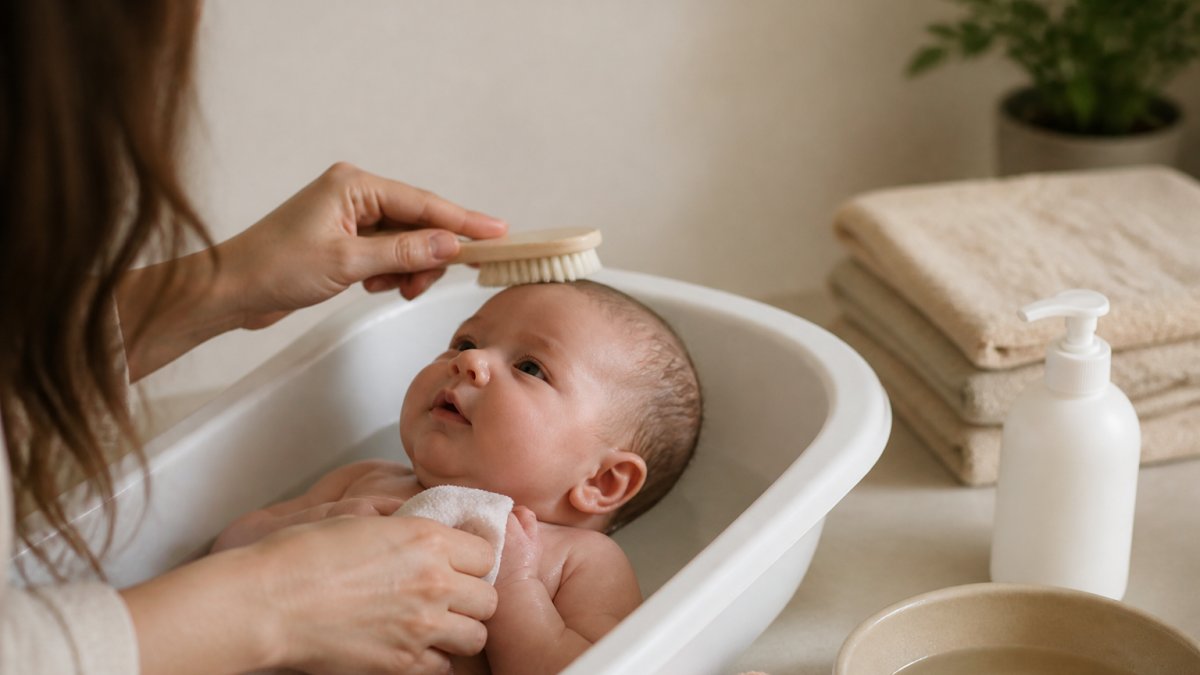
The safest way to remove cradle cap flakes is to soften the scales first, then lift them gently with a soft brush or comb. Never pick or scrape at crusts. The skin underneath is delicate, and force causes irritation.
Softening First, Then Brushing
Softening is the step most people rush. Give it time and the flakes lift on their own.
- Apply a small amount of plain mineral oil or petroleum jelly to the scalp
- Leave it on for about 15 to 30 minutes so the crusts loosen
- Wash with a mild baby shampoo using warm, not hot, water
- Brush softly with a soft baby brush or fine-tooth comb
- Rinse well, then pat the scalp dry
A common mistake is brushing hard to speed things up. Use light pressure and let the brush do the work.
The Best Oil for Cradle Cap (and Which Ones to Avoid)
The best oil for cradle cap is a plain, fragrance-free one: mineral oil, petroleum jelly, or plain baby oil. These soften scales without adding plant compounds or scent that can irritate infant skin. The Cleveland Clinic's cradle cap guidance and the Raising Children Network's cradle cap advice both favor simple, fragrance-free options for this reason.
Natural oils are popular, but they are not interchangeable. Here is how the common suggestions actually stack up:
- Mineral oil and petroleum jelly. Well established for softening crusts. Low irritation risk, no fragrance, no plant allergens. The main caveat is overuse: a thick layer left on for days can trap oil and make the oily scale worse.
- Plain baby oil. Usually mineral oil with a little fragrance. Fine for most babies, but choose a fragrance-free version if the scalp is sensitive.
- Coconut oil. A frequent home suggestion. Some babies do well; others get redness or more buildup. Use it thin, short-contact, and patch-test first. Treat claims that it "cures" cradle cap as anecdote, not evidence.
- Olive oil and other plant oils. Commonly recommended, but plant oils can feed the yeast and oil balance involved in seborrheic dermatitis and may irritate sensitive skin. If you try one, keep contact brief and wash it out.
- Essential oils (tea tree, lavender, chamomile). Skip these on a baby's scalp. They can sting, sensitize, and trigger reactions, and there is no good evidence they help cradle cap.
A few cautions matter here:
- Keep applications short, thin layer, 15 to 30 minutes, then wash out. Heavy oil left on for days can worsen the oily condition.
- Avoid anything with fragrance, alcohol, or strong plant extracts.
- Patch-test any new oil on a small area of skin first, then wait a day.
- Never apply oil to broken, oozing, or infected-looking skin.
How Often to Wash Baby Hair With Cradle Cap
Wash baby hair with cradle cap about two to three times a week using a mild baby shampoo. Frequent shampooing helps lift oils and flakes. If the scalp looks very oily, washing every other day is fine.
The Cochrane review of infantile seborrhoeic dermatitis treatments describes approaches that include oils or keratolytics followed by washing and brushing, or frequent washing with baby shampoo. In short, regular washing is a core home-care step, not a risk.
| Wash Frequency | Best For | Notes |
|---|---|---|
| 2-3 times per week | Most babies | Mild baby shampoo, warm water |
| Every other day | Very oily scalps | Watch for dryness |
| Daily | Thick, stubborn crusts | Gentle shampoo only, rinse well |
Use warm water and rinse thoroughly. Leftover shampoo can dry the scalp and add to flaking.
A Step-by-Step Natural Cradle Cap Routine
A steady routine beats a one-time deep clean. Set aside 20 to 30 minutes, two or three times a week, and keep every step gentle.
- Prep. Fill the bath with warm water and gather a soft brush, mild baby shampoo, and your chosen oil.
- Soften. Apply a thin layer of mineral oil or petroleum jelly to the crusty areas.
- Wait. Let it sit for 15 to 30 minutes while your baby plays or feeds.
- Wash. Massage a small amount of mild baby shampoo into the scalp with your fingertips.
- Brush. Use a soft baby brush in light, circular strokes to loosen crusts.
- Rinse. Rinse thoroughly with warm water until no shampoo remains.
- Dry. Pat the scalp gently with a soft towel.
What to Expect and When Treatment Is Working
Expect gradual improvement over one to two weeks, not overnight. Working signs include softer scales, fewer flakes after washing, and no redness or fussiness.
If the scalp looks angrier after a routine, scale back. Less oil, softer brushing, and more rinsing usually settle it.
A few quiet minutes of gentle care can soothe both baby and parent.
When to See a Doctor for Cradle Cap
See a doctor for cradle cap if the scalp looks infected, spreads beyond the scalp, or does not improve after a few weeks of gentle home care. Also call if your baby seems uncomfortable or itchy.
Watch for these signs:
- Redness, swelling, or warmth around the scales
- Oozing, crusting that weeps, or a bad smell
- Patches spreading to the face, eyebrows, or diaper area
- Excessive crying or scratching at the scalp
- No change after several weeks of gentle washing
Cradle Cap vs. Other Scalp Conditions
Most cradle cap is easy to recognize: greasy yellow scales on the scalp, sometimes with mild redness, and a baby who is otherwise content. But a few other conditions can look similar, and the difference changes what you should do.
- Eczema (atopic dermatitis). Tends to be dry, red, and itchy rather than oily and crusty. It often appears on the cheeks, elbows, and knees too, and the baby may be fussy or scratch. Eczema responds to moisturizers and sometimes prescribed creams, not to oil-softening routines alone.
- Infection (bacterial or fungal). Signs include spreading redness, warmth, swelling, oozing, pus, or a bad smell. This needs medical assessment, not home care.
- Seborrheic dermatitis beyond the scalp. Patches on the eyebrows, behind the ears, or in the diaper area can be part of the same condition. Mention it to your pediatrician so the whole picture is assessed.
- Ringworm or other fungal rashes. Less common in young babies, but a ring-shaped, scaly patch that spreads is a reason to ask rather than guess.
A practical rule: if the scalp looks angrier after gentle care, or if the baby seems uncomfortable, stop the routine and ask your pediatrician or a dermatologist. If you are unsure which condition you are looking at, bring it up at the next visit rather than trying stronger remedies at home.
Conclusion
Cradle cap can feel like one more thing to worry about in the first months of parenthood. Gentle, consistent care handles most cases. Soften, wash, brush lightly, and rinse well.
For parents who want botanical, climate-aware skin care that respects sensitive skin, Mojave Desert Skin Shield offers organic, Ayurveda-inspired formulas made for dry, sun-exposed climates. Explore our skin care line and our wellness rituals to build a calm daily routine for the whole family. View cart to get started.
Frequently Asked Questions
What oil is best for loosening cradle cap?
Plain mineral oil, petroleum jelly, and baby oil are the emollients most often recommended before washing, according to Cleveland Clinic guidance. Some parents use coconut oil, but not every source endorses it; Cleveland Clinic's excerpt advises avoiding unspecified alternatives. Whichever you choose, apply a thin layer, leave it on briefly, then wash and brush gently. Skip heavy oils left sitting for days, which Tubby Todd notes can feed the oily condition.
Should I wash my baby's hair every day with cradle cap?
Daily washing is not required for every baby. Gentle washing and soft brushing are commonly presented as first-line home-care steps, and frequent washing with baby shampoo is one approach described in a Cochrane review of infantile seborrhoeic dermatitis interventions. Many parents find every-other-day washing with a mild, nonmedicated baby shampoo works well. Use warm water, rinse thoroughly, and adjust frequency if the scalp looks dry or irritated.
How do I remove cradle cap flakes without hurting my baby's scalp?
Soften first, then lift. Apply a thin layer of mineral oil or petroleum jelly, wait a few minutes, and wash with a mild baby shampoo. Use a soft baby brush or scalp brush with gentle pressure to loosen crusts, and never pick or forcefully remove scales. If flakes do not lift easily, leave them and try again another day. Thorough rinsing afterward helps prevent residue that can irritate sensitive skin.
When should I contact a doctor about my baby's cradle cap?
See a healthcare professional if the scalp looks infected (oozing, crusting that spreads, or pus), if your baby seems uncomfortable or itchy, or if home care with gentle washing, oils, and brushing has not helped after a few weeks. A pediatrician or dermatologist can confirm whether it is cradle cap or another skin condition such as eczema, and recommend treatment if needed.