
Table of Contents
- Understanding Skin Barrier Function and Why It Matters
- Damaged Skin Barrier Symptoms: When Your Skin Is Asking for Help
- What Breaks Down the Skin Barrier: Common Causes and Irritants
- A Staged Skin Barrier Repair Routine for Lasting Resilience
- Choosing the Best Moisturizer for Skin Barrier Repair
- How Long Does Skin Barrier Repair Take? Setting Realistic Expectations
- Adapting Barrier Care for Different Skin Types, Climates, and Life Stages
- Conclusion
- Frequently Asked Questions
Last Updated: October 15, 2026
Understanding Skin Barrier Function and Why It Matters
Your skin barrier is the outermost layer of your skin, a thin, living shield that keeps water in and irritants out. When it works, you barely notice it. When it fails, everything stings, flakes, and feels tight. This guide from Mojave Desert Skin Shield explains how to maintain skin barrier health, even in punishing, sun-exposed climates.
The barrier's job is simple in principle and remarkable in execution: it holds moisture in while blocking allergens, pollutants, and microbes. According to the American Academy of Dermatology's guidance on dry skin, a healthy barrier depends on lipids that seal the spaces between skin cells. Strip those lipids, and moisture loss accelerates immediately.
The Biology: Corneocytes, Lipids, and the Microbiome
Think of the barrier as a brick wall. Corneocytes are the bricks, flattened skin cells packed with keratin. The mortar is a mix of skin lipids: ceramides, cholesterol, and free fatty acids. A healthy microbiome lives on the surface, keeping harmful organisms in check. Damage the mortar and the wall weakens, letting water escape and irritants enter.
Damaged Skin Barrier Symptoms: When Your Skin Is Asking for Help
Damaged skin barrier symptoms are easy to recognize once you know what to look for: redness, itching, tightness, flaking, stinging, and sensitivity to products that never bothered you before. These signs mean moisture loss has outpaced repair. The skin is asking for help. A common mistake is layering on more active ingredients when the barrier needs less, not more.
What Breaks Down the Skin Barrier: Common Causes and Irritants
The most frequent culprit is over-exfoliation. Acids and scrubs strip lipids faster than skin can rebuild them. Other common causes include harsh cleansers, hot water, fragrance, alcohol-based toners, and environmental stressors like dry air, wind, and UV exposure. Even stress and lack of sleep slow repair.
What most guides miss is that damage is usually cumulative, not dramatic. A daily foaming cleanser plus a weekly peel plus winter air can compromise a barrier that none of those alone would harm. That is why the useful question is not "what is the one bad product?" but "which inputs are stacking up?"
A One-Change-at-a-Time Troubleshooting Method
When skin is reactive, guessing wastes weeks. Use a simple elimination sequence instead:
- Strip to a baseline. For 7-10 days, use only a mild cleanser, a basic moisturizer, and sunscreen. No exfoliants, no serums, no masks, no fragrance.
- Log what you use. Note each product, the day you started it, and any stinging, redness, or flaking within 24 hours.
- Reintroduce one product at a time. Add a single product back every 5-7 days. If symptoms return, stop that product and wait until skin is calm again before testing the next one.
- Patch test before full-face use. Apply a small amount behind the ear or on the inner forearm for 24-48 hours. A reaction there usually means a reaction on the face.
- Change one variable at a time. If you switch cleanser and moisturizer on the same day, you will not know which one helped or hurt.
Likely Irritants, Ranked by How Often They Cause Trouble
- Exfoliating acids (AHA/BHA/PHA) and retinoids, the most common cause of cumulative damage when used more than 2-3 times per week.
- Foaming and sulfate-heavy cleansers, strip lipids and leave skin tight after washing.
- Fragrance and essential oils, frequent triggers for redness and stinging, even in "natural" formulas.
- Alcohol-based toners and astringents, disrupt the lipid mortar and worsen moisture loss.
- Physical scrubs, cleansing brushes, and hot water, mechanical and thermal stress that weakens the barrier over time.
- Environmental load, dry air, wind, UV, and indoor heating or air conditioning all increase transepidermal water loss.
- Lifestyle factors, poor sleep, high stress, and dehydration slow the skin's own repair cycle.
A common pattern is that people blame the newest product when the real problem is the oldest habit, daily exfoliation, a hot shower, or a cleanser that leaves skin squeaky clean. Fix the habit first, then reassess the products.
A Staged Skin Barrier Repair Routine for Lasting Resilience
A skin barrier repair routine works best in stages: cleanse gently, hydrate with barrier-supporting ingredients, then seal with a moisturizer. Rushing this sequence, or skipping the seal step, slows recovery. Below is the protocol we recommend.
Step 1: Gentle Cleansing Without Stripping
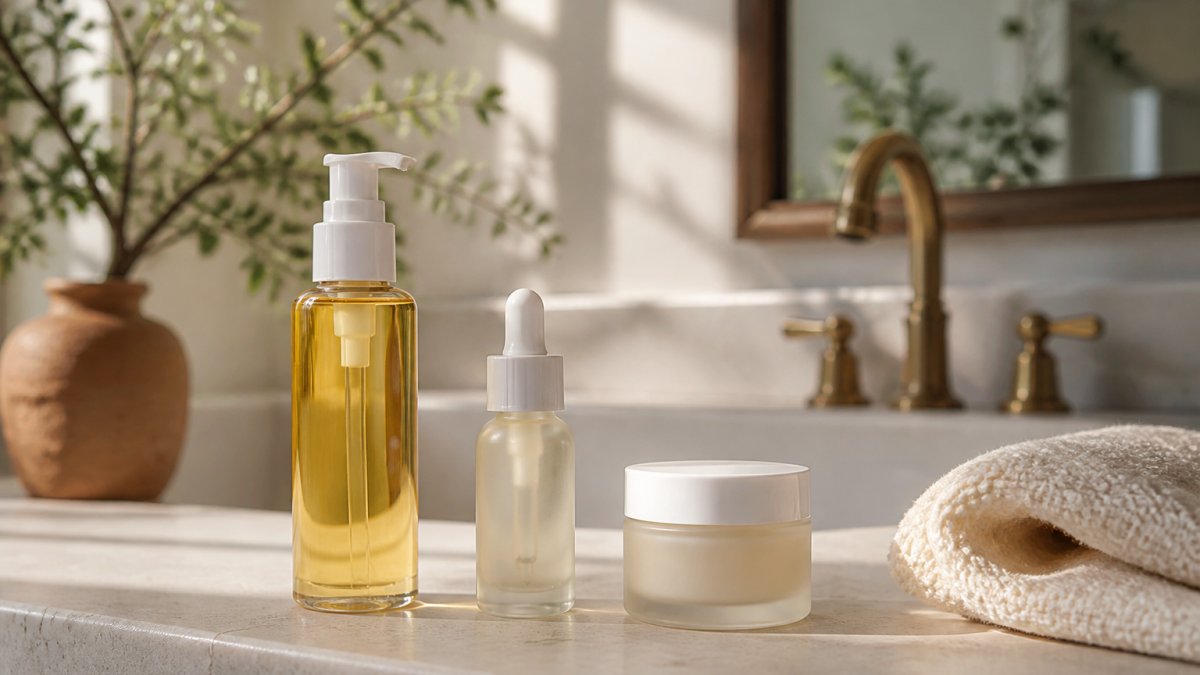
Swap foaming cleansers for a mild cleansing oil or cream, and use lukewarm water. Our Organic Calming Cleansing Oil removes makeup and dirt without disturbing the skin's delicate bio-balance, thanks to antioxidant-rich coriander seed, sage, and cedar wood. Cleanse once at night; a water rinse is often enough in the morning.

Step 2: Hydration and Barrier-Supporting Ingredients
Apply humectants to damp skin. Hyaluronic acid, panthenol, and niacinamide draw water into the upper layers, while ceramides and essential fatty acids rebuild the lipid mortar. Our Organic Desert Nectar Serum uses sodium hyaluronate, a highly absorbable form of hyaluronic acid, to relieve dryness and plump the skin.
Step 3: Seal and Protect with the Right Moisturizer
Hydration means nothing without a seal. Apply a barrier cream or facial oil over your serum to lock moisture in and aid the repair process. Our Organic Replenishing Cream is a lightweight, soothing formula that deeply seals moisture into the skin, and it pairs well over the serum for mature or extra-dry skin.
Choosing the Best Moisturizer for Skin Barrier Repair
The best moisturizer for skin barrier repair contains three things: ceramides or fatty acids to rebuild lipids, humectants like hyaluronic acid or panthenol to attract water, and occlusive ingredients to prevent moisture loss. Fragrance-free formulas reduce irritation risk. Texture matters less than consistency.
| Skin Need | Ingredient to Look For | Why It Helps |
|---|---|---|
| Tightness, flaking | Ceramides, cholesterol | Rebuild the lipid barrier |
| Dull, dehydrated skin | Hyaluronic acid, panthenol | Draw in and hold water |
| Redness, reactivity | Colloidal oatmeal, niacinamide | Calm irritation |
| Severe dryness | Facial oils, rich creams | Seal in moisture |
How Long Does Skin Barrier Repair Take? Setting Realistic Expectations
How long does skin barrier repair take? Most people see meaningful improvement in two to four weeks, with full recovery taking up to eight weeks for severely compromised skin. Consistency matters more than intensity. But "be patient" is not a plan. Here is a staged timeline with concrete markers so you know whether you are actually recovering.
Organic Replenishing Cream 3.4 oz →
A Staged Recovery Timeline
Week 1-2: Calm and stop the damage. Stop all exfoliants, retinoids, vitamin C, and fragrance.
Week 3-4: Early repair. Stinging should decrease, and flaking should ease. Redness may still be visible but should not be spreading. If skin is calmer, you can add one barrier-supporting serum (for example, a hyaluronic acid or panthenol formula) under your moisturizer.
Week 5-6: Consolidation. Skin should feel comfortable most days, tolerate lukewarm water without stinging, and handle your basic routine without reaction.
Week 7-8: Reintroduction. If skin has been calm and non-reactive for 7 consecutive days, reintroduce one active at a time. Start at the lowest frequency: once per week, buffered over moisturizer if your skin is sensitive.
Criteria for Restarting Actives
Do not restart exfoliants or retinoids just because a calendar says so. Restart only when all of the following are true:
- No stinging when you apply your basic moisturizer.
- No flaking or tightness within an hour of cleansing.
- No new redness or reactivity to products you previously tolerated.
- Skin has been stable for at least 7 consecutive days.
If any of these fail, you are still in recovery. Adding an active too early is the single most common reason barrier repair stalls.
What Slows Recovery
- Reintroducing multiple products at once.
- Using "gentle" exfoliants (PHAs, enzyme powders) before skin is ready.
- Hot showers, harsh washcloths, and skipping moisturizer on "oily" days.
- Skipping sunscreen, which lets UV undo overnight repair.
- Switching products every few days instead of holding a stable routine.
Adapting Barrier Care for Different Skin Types, Climates, and Life Stages
Barrier care is not one-size-fits-all. Oily skin still needs lipids, just in lighter textures. Humid climates call for gels and mists; arid climates demand richer creams and oils. Our Organic Chaparral Protective Mist acts like a buffer between your skin and the environment, helping it adapt whether you are in the desert, the city, or by the ocean.
Life stage shifts the equation too. Babies have thinner, more permeable skin, so patch-test everything. Older skin produces fewer lipids and needs more occlusive protection. Travelers moving between dry and humid cities should adjust texture, not abandon their routine.
Conclusion
Rebuilding a compromised barrier takes patience, and the wrong products can undo weeks of progress. Mojave Desert Skin Shield formulates climate-adaptive skincare for exactly this problem, from the Organic Calming Cleansing Oil through the Desert Nectar Serum to the Organic Replenishing Cream. Each is dermatologist tested, vegan, and cruelty free. Get started with Mojave Desert Skin Shield and give your skin the protection it needs to recover.
Frequently Asked Questions
How can I tell if my skin barrier is damaged?
Common damaged skin barrier symptoms include persistent redness, itching, tightness, flaking, and stinging when you apply products that previously felt fine. Your skin may also feel dry no matter how much moisturizer you use, or react to ingredients it once tolerated. If these signs appear after over-exfoliating, trying new actives, or spending time in harsh weather, your barrier is likely compromised and needs a gentle reset.
What is the best moisturizer for repairing a damaged skin barrier?
Look for a moisturizer with ceramides, cholesterol, and fatty acids, the lipids your barrier is made of. Hyaluronic acid and panthenol draw in water, while colloidal oatmeal and niacinamide calm redness. A richer cream that seals in moisture works better than a lightweight lotion when your barrier is compromised. Apply it to slightly damp skin after cleansing and again at night to support overnight repair.
How long does skin barrier repair take?
Most people notice improvement within one to two weeks of simplifying their routine and focusing on gentle cleansing, hydration, and barrier protection. Full recovery can take four to six weeks, depending on how damaged your barrier was and how consistently you avoid irritants. If redness, itching, or flaking persists beyond six weeks or worsens, see a dermatologist to rule out eczema, rosacea, or contact dermatitis.
Can I use active ingredients like alpha arbutin or retinol while repairing my barrier?
Pause strong actives until your barrier stabilizes. Ingredients like retinol, alpha arbutin, and exfoliating acids can slow recovery when your skin is already compromised. Once redness, stinging, and flaking subside, reintroduce one active at a time, starting once or twice a week. Watch for irritation and back off if symptoms return. Gentle, barrier-supporting products should remain the foundation of your routine.
How can I protect my skin barrier from dry air and sun exposure?
Use a humidifier indoors and avoid long, hot showers, which strip lipids. Apply a barrier cream or richer moisturizer morning and night, and never skip daily sunscreen, since UV damage weakens barrier function over time. In arid climates, layer a hydrating serum under your moisturizer to reduce transepidermal water loss. A protective mist with antioxidants can also help buffer environmental stressors throughout the day.